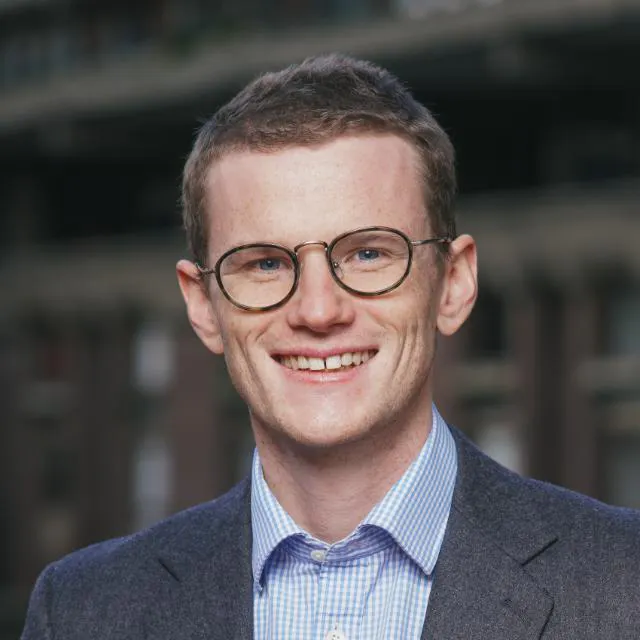
Gabriel Moberg
Alone on a beach with 150 refugees: Gabriel's UWC Atlantic story
When Gabriel arrived at UWC Atlantic College, he had no way of knowing that the skills he would learn on the water in Wales would one day help him steady 150 stranded refugees on a beach in Lesbos.
Gabriel (AC'16) was among the very first students in what would become the @Atlantic Pacific programme. The RNLI lifeboat station had closed. Students were going out on the water twice a week, training hard but without a clear purpose to anchor it all to. Then came a Friday night lecture and everything changed.

Robin Jenkins (AC '92 ) spoke about the 2011 tsunami that had devastated communities along the Japanese coastline. The disaster had exposed a critical gap: Japan had no inshore rescue infrastructure, no shallow-water RIBs capable of operating in floodwater, no rapidly deployable lifeboat stations. Thousands had drowned who need not have.
The idea that took hold was as practical as it was bold. Students at Atlantic College along with Robin Jenkins would help build an inshore rescue boat, store it in a modified shipping container that could serve as a self-contained lifeboat station and send it to Japan. This is where the Atlantic Pacific and the partnership with Atlantic College began. Robin along with 5 students from Atlantic College then travelled to Japan, to train local paramedics and volunteer responders in search and rescue techniques.
For Gabriel, the experience of building and then deploying that boat - of teaching life-saving skills across language barriers, in a culture entirely different from his own - became a template for everything that followed.
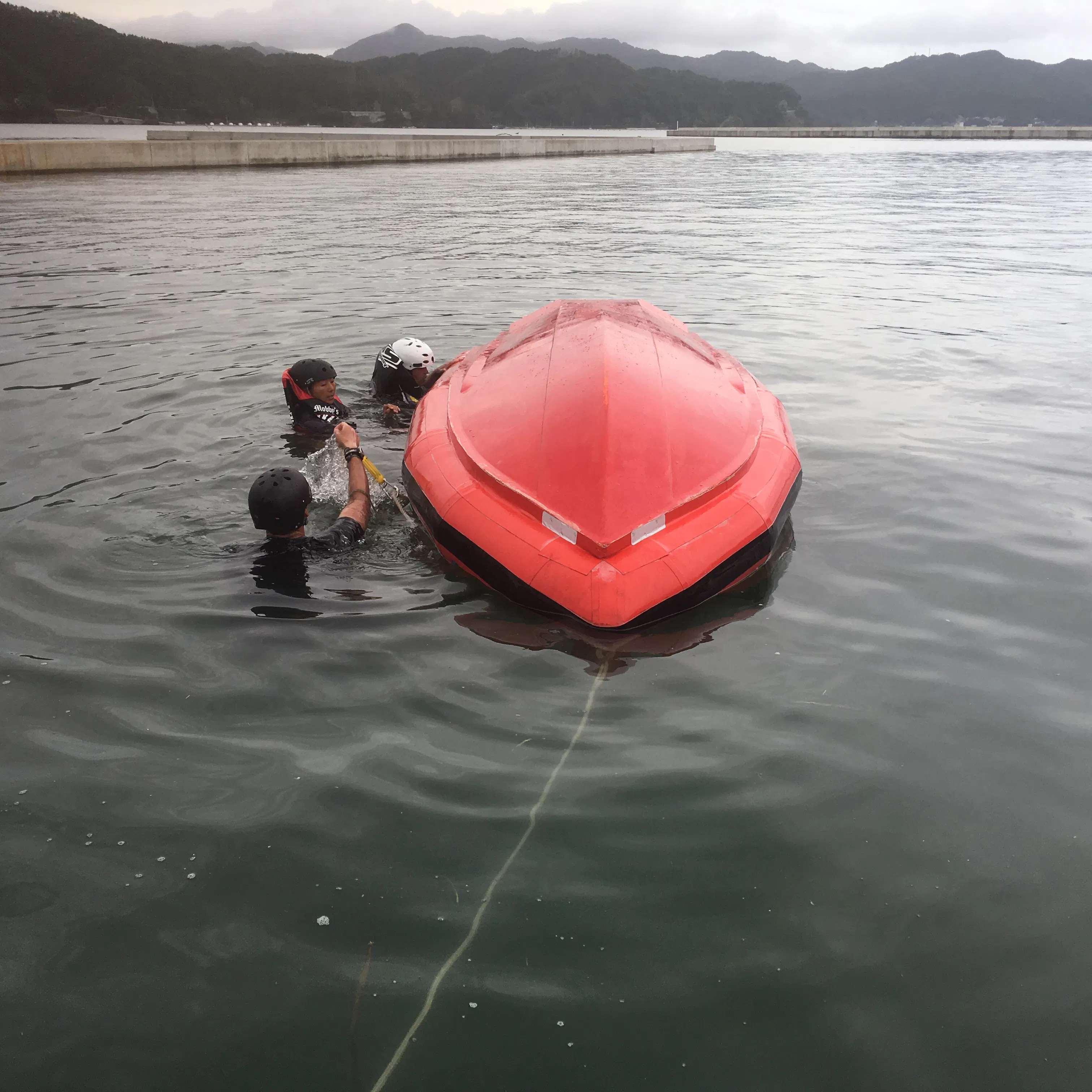
After graduating, Gabriel returned to the water, this time in the Aegean. He travelled to Lesbos to volunteer on search and rescue boats during the height of the refugee crisis, using the same inshore rescue skills he had first developed at Atlantic College.
One moment in particular has stayed with him. He was on a small boat with two colleagues when they became the first to reach a scene where around 150 refugees had landed. With support needed elsewhere, his colleagues had to leave, one to fetch help, one to stay with the boat and Gabriel found himself alone on the shore, responsible for keeping everyone calm until proper support could arrive. Not a single person spoke English. Gabriel's French was limited, and only a handful of the refugees spoke any at all. For an hour and a half, with almost no shared language, he held the situation together.
"I remember thinking to myself, what am I doing in this situation?" he says. But he managed. And reflecting on it now, he can trace that capacity directly back to Japan to the experience of working across language barriers, of building trust without words, of staying calm when the stakes are high. "Being at ease with people," he says, "is a real through-line between all of these things."
He went on to study Philosophy, Politics and Economics at King's College London, then Public Policy at Harvard. He worked in international development in Geneva researching corruption and developing policy to improve natural resource governance, before helping to build the Green Grids Initiative - a Department of Energy-backed effort to catalyze investment in decarbonising energy infrastructure and today serves as Policy Adviser for Climate Change, Planning and Environmental Law at the Law Society.
Through all of it, he traces a thread back to that seafront in Wales.
That ability to connect across differences, across language, culture, background, was forged, he believes, not just in the classroom or on the water, but in the conversations that stretched late into the night in the day room, with students from dozens of countries, arguing about politics and the state of the world.
AP@AC celebrates its 10th anniversary this year. The programme continues to give students a living purpose for their seamanship. If you would like to support the programme and help more students like Gabriel find their path, please consider making a donation here.
"I think AP@AC prepared me in ways I didn't fully appreciate at the time. Travelling somewhere far away with almost nothing didn't feel as scary. You've got to be able to build relationships from the get-go with a real variety of different people. And I think something that UWC gives you is the ability to find common ground with almost anyone. At the end of the day, the thing that shapes you most is the other students."


